
One of our goals as Dianic Witches is liberation for all oppressed people, with our focus on women and girls. Our grove is named after Aradia to honor her work of teaching magic to the oppressed, so they could free themselves. Our tradition, though, is not based on Her magical practice of Stregheria (Italian witchcraft).
THE GOSPEL OF ARADIA
from Italian Witchcraft, by Raven Grimassi
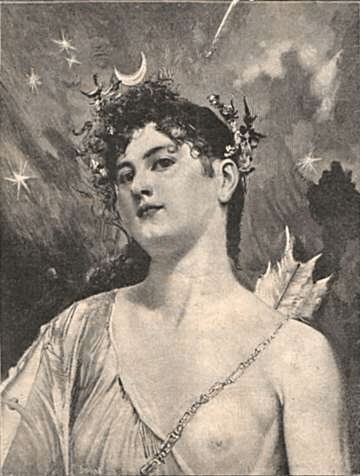
Aradia was born in Volterra, Italy in the early part of the fourteenth century. [Editorial note: on August 13, 1313, by some traditions.] Even as a child there was a sense of spirit about her, and her parents believed that she might become a Catholic nun, themselves being of the Catholic faith. Her aunt had other ideas, for she was of the Old Religion.
In the course of time the aunt was hired to care for Aradia, and she began to tutor the young child in the Old Ways. Aradia listened with great interest to the tales of forgotten gods and ancient spirits. Her spirit grew and she understood the inner truths of these stories. Then, on her thirteenth birthday, Aradia was initiated into the Old Religion. Something inside of her then awoke, and she began to remember other realities.
Up in the hills of Nemi, near the lake upon whose shores the ancient temple of Diana had stood, Aradia sat and listened to the inner voices. A voice spoke to her, telling her to open her eyes and look upon the sky. It was then that she noticed that the sky had begun to darken, but the afternoon had not yet passed. The voice spoke again and whispered the word “Moonshadow.”
Looking about her, she saw the beauty of all things, and the equality of all things. She understood, and with the enlightenment that had come upon her, Aradia opened her heart and mind to the vastness of all she perceived.
She decided not to return to her home, and was taken in among the outlaw camps that were hidden in the woods. Here she learned of the sorrows of those who lived in slavery, and listened to tales of cruelty and evil task masters. She learned also of the hypocrisy of the Church, which aided the nobles in controlling the peasants.
Aradia began to contemplate the plight of the peasants who labored for the wealthy lords. She embraced their sorrow and was moved with compassion for them. In the months that followed, she began to go among the villages to heal and counsel the people, giving them comfort and hope.
The people came to love her, and they called her “the Beautiful Pilgrim.” Her fame spread throughout the towns and villages, and she began to teach the Old Religion. It was not long before the Church became aware of her, and the priests who were accompanied by a group of soldiers confronted her. Aradia rebuked them for the hypocrisy of the Church, and she was arrested for heresy. When it was learned that she wanted to free the peasants from servitude, she was also charged with treason against the kingdom.
While awaiting execution in prison, an earthquake toppled the structure and the word spread that Aradia had died. Later she appeared in the outlaw camp and chose a small group of followers to accompany her on a journey. In the months that followed, Aradia initiated them and taught them all the secrets of the Old Ways.
One day she announced that she must leave them, and she presented them with a set of nine scrolls. Aradia departed to the east and was never seen again. Her followers began to form groves throughout the Kingdom of Naples, and the Church was greatly concerned over the revival of the Old Religion. In time the followers of Aradia were hunted down by the soldiers and the scrolls of Aradia were captured and given over to the Church. The last few remaining survivors of Aradia’s original followers took refuge in the town of Benevento, and began to teach the Old Ways there once more.
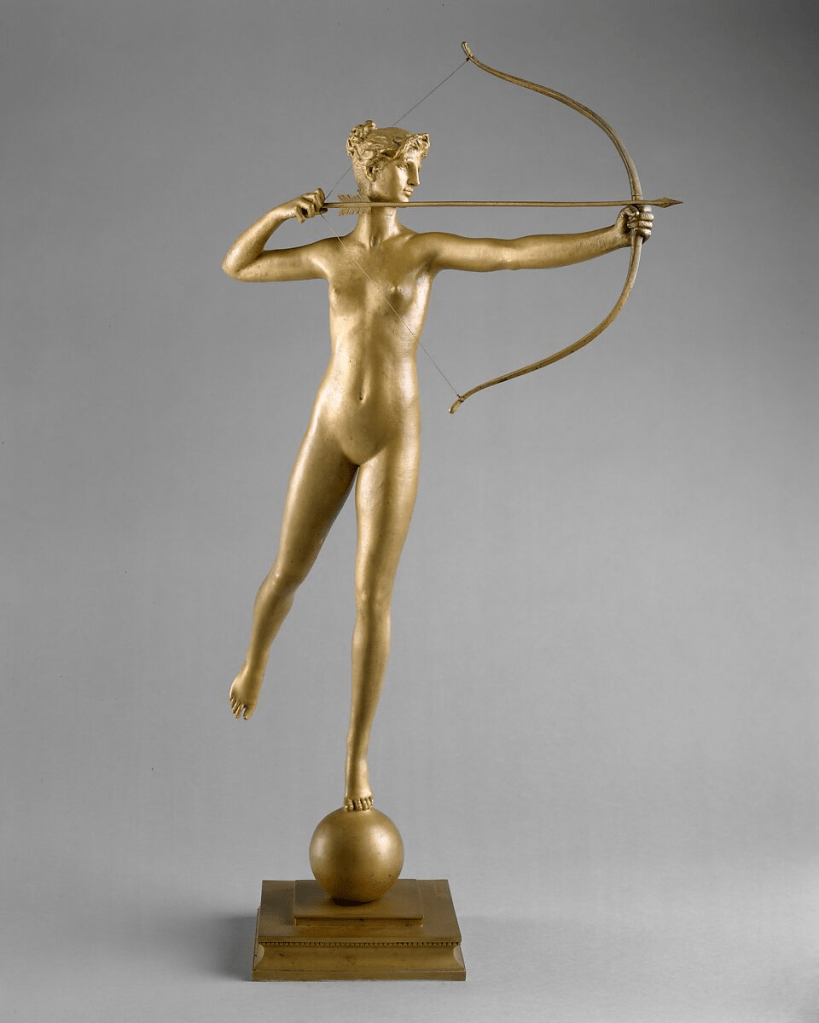
To Diana
from Aradia, Gospel of the Witches, by C. G. Leland
Lovely Goddess of the bow!
Lovely Goddess of the arrows!
Of all hounds and of all hunting
Thou who wakest in starry heaven
When the sun is sunk in slumber
Thou with moon upon thy forehead,
Who the chase by night preferrest
Unto hunting in the daylight,
With thy nymphs unto the music
Of the horn–thyself the huntress,
And most powerful: I pray thee
Think, although but for an instant,
Upon us who pray unto thee!
 Circle of Aradia: Serving Amazons, Goddess Women & Dianic Witches since 1988